DEXFI TREASURY BONDS

What Are DexFi Treasury Bonds?

People get into crypto because they want to make money.
Preferably fast, a lot of it, and without having to do too much work.

What are DexFi Treasury Bonds?

In reality, of course, it is a lot harder than that. The crypto world is full of projects promising huge returns. Sometimes there is a serious product behind those promises. Sometimes it is mostly a good marketing story. And sometimes it is simply an outright scam. Telling the difference is not always easy.

And even when a project is legitimate, that does not mean you will automatically get rich. You still need to understand how it works, where the money comes from, what can go wrong, and what you need to do yourself.

DexFi presents itself as one of those serious projects. According to DexFi, its DexFi Treasury Bond lets you earn money with crypto while DexFi handles the complicated work behind the scenes.

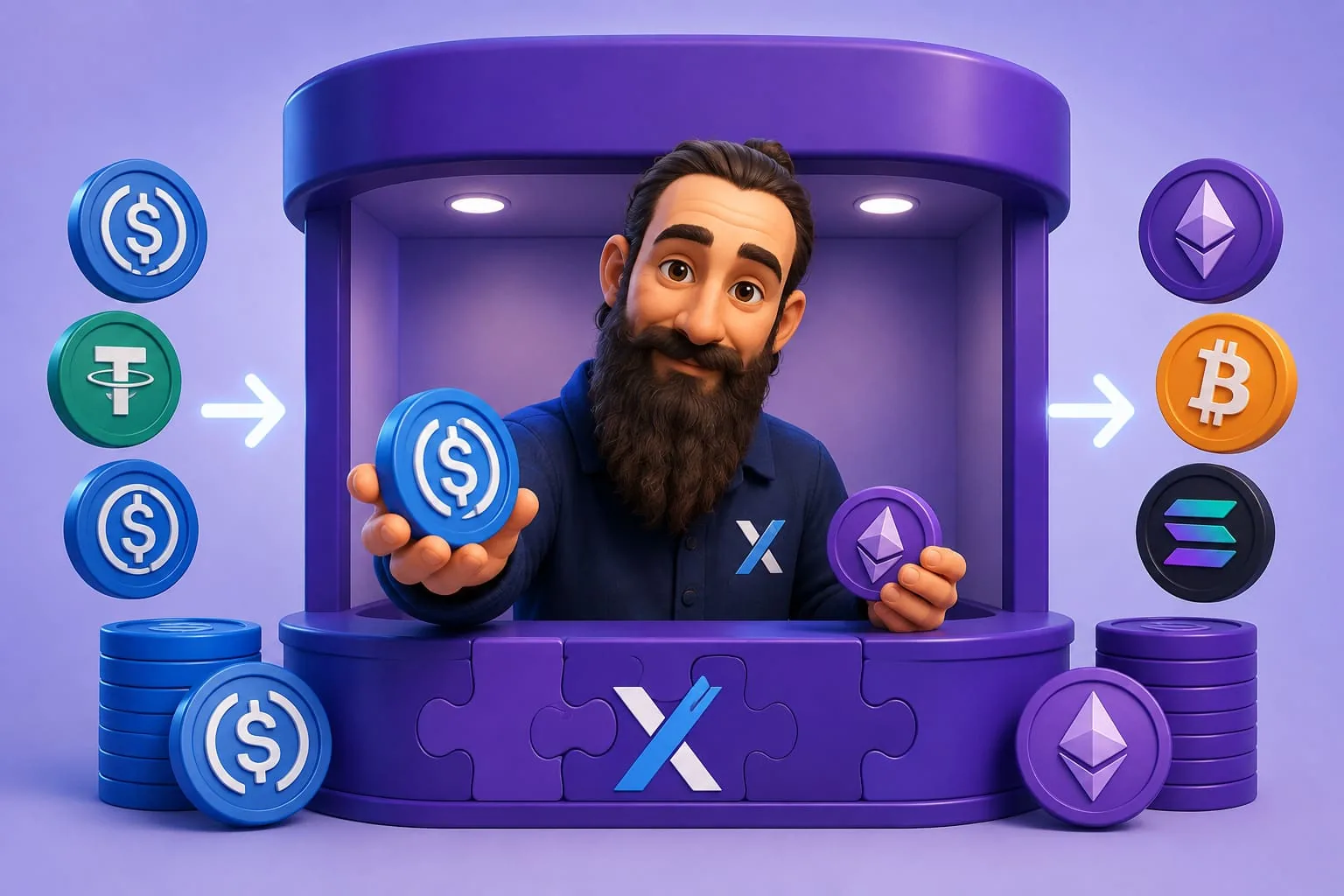
So how does that work? The money behind the Bonds is deployed in DexVaults. You can think of a Vault as a digital exchange booth. Each Vault contains two cryptocurrencies that people can trade against each other.

Say John uses a Vault to swap one cryptocurrency for another. John pays a transaction fee. Part of that fee goes to the Vault. That is how the Vault generates revenue. Through your Bond, you ultimately receive a share of that revenue.

This all happens on-chain, which means you can check for yourself what is happening.

You could also set up and manage Vaults like this yourself. But doing so takes time and knowledge.

With a Treasury Bond, DexFi takes that work off your hands. You buy the Bond; DexFi manages the Vaults.

But what actually needs to happen for a Vault like this to make money? To understand why that matters, let’s first look at what it takes to manage a Vault yourself.


Why is making money with crypto harder than it looks?

Why is making money with crypto harder than it looks?

Buying a cryptocurrency is not that complicated. You might buy ETH (Ether), for example, and hope its price goes up.

But there are also ways to earn money with crypto without waiting for the price to rise. One of them is liquidity providing. You provide two cryptocurrencies that other people can trade between. In return, you receive a share of the transaction fees.

That sounds simple, but there are a few catches:

  • You need enough trading volume. If there is not much trading activity, there are not many transaction fees to earn.
  • You need to keep managing it. Crypto markets move constantly, so you need to keep an eye on what is happening and make adjustments when necessary.
  • You need to know what you’re doing. The decisions you make affect how much you can earn, but also how much risk you take.

One strategy designed to get more out of your capital is Maximum Concentrated Liquidity Providing. Instead of spreading your money across a very wide price range, you concentrate it around the price where most trading is happening. That means more of your money can actually be used for trades, potentially generating more transaction fees.

The trade-off is that this requires more active management. The narrower the price range, the easier it is for the market price to move outside it. When that happens, you need to make adjustments before your liquidity can start earning transaction fees again.

So you need to stay alert, make decisions, and adjust your liquidity as the market moves.

How does DexFi do this?

How does DexFi do this?

DexFi is a DeFi platform that develops and manages the DexVaults and Treasury Bonds discussed in this article.

With a Treasury Bond, you do not have to manage all of this yourself. DexFi deploys the money behind the Bonds in DexVaults and manages them using AiLM (Automated Intelligent Liquidity Manager).

To understand how that works, let’s start with the DexVaults.

How does a DexVault work?

How does a DexVault work?

A DexVault works with two cryptocurrencies, such as ETH and USDC. These assets are provided as liquidity for trading. When someone swaps ETH for USDC, or USDC for ETH, they pay a transaction fee. Part of that fee goes to the Vault.

But simply making money available for trading is not enough. Where that liquidity is placed matters too.

Suppose ETH is trading at $3,000. The Vault could make its ETH and USDC available across a wide price range, such as $1,000 to $5,000. Or it could concentrate that liquidity within a much narrower range, such as $2,900 to $3,100.

A DexVault works in much the same way. By concentrating liquidity within a smaller range around the current market price, more of the money can be used for trading. That can generate more transaction fees.

But the narrower the range, the easier it is for the price to move outside it.

If ETH rises from $3,000 to $3,200, for example, the market price is now outside the $2,900 to $3,100 range. The liquidity is no longer being used for trades. To start earning transaction fees again, the price range needs to be adjusted.

And that is exactly why a DexVault needs active management.

What is AiLM?

What is AiLM?

DexFi uses AiLM (Automated Intelligent Liquidity Manager) to help manage its DexVaults. The tool automates much of the day-to-day work.

AiLM is based on DexFi’s years of experience with DeFi and liquidity management. It uses that knowledge to analyze the market and decide where to deploy liquidity.

If the price moves outside the selected range, AiLM analyzes market data from the previous 24 hours and determines where the liquidity should be redeployed. If that analysis does not produce a better option, AiLM falls back on settings defined in advance by DexFi. The process happens automatically.

The DexFi team remains responsible for the overall strategy. Humans remain in control and can step in when necessary.

This approach has now been used in practice for some time. The historical APR since the launch of the Treasury Bonds is currently between 45% and 50% (September 2026).

Those historical results are strong, but what the Vaults earn in the future will still depend on market conditions.

Of course, all those DexVaults need capital. That money comes from the DexFi Treasury.


VIDEO

DexFi Treasury Bonds Explained

Watch the video version of this article.

What is the Treasury?

What is the DexFi Treasury?

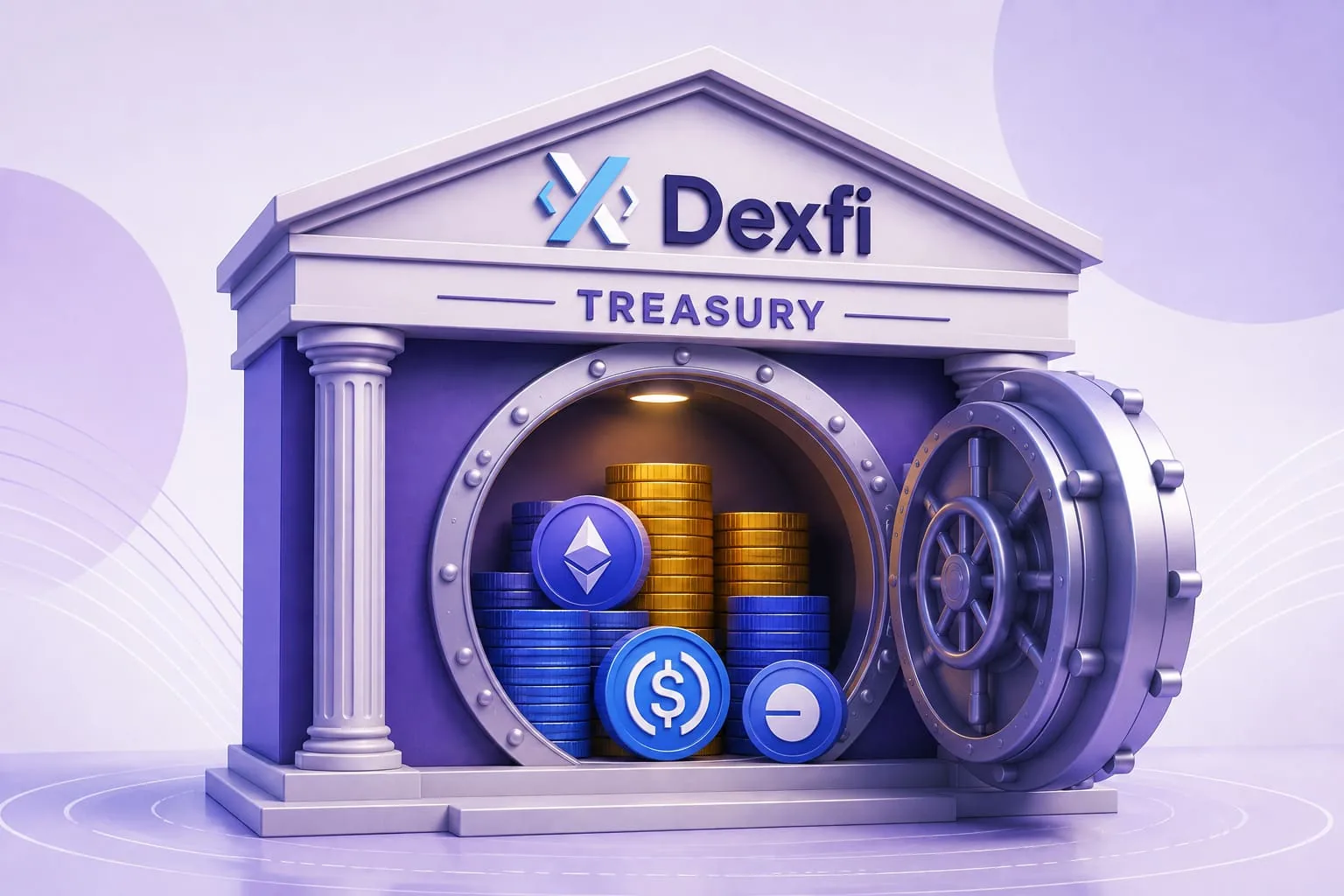
You can think of the DexFi Treasury as the central pool of capital behind the Treasury Bonds. This is where the assets used throughout the system are held.

When someone buys a new Bond, new capital enters the Treasury. From there, the money is deployed in the DexVaults.

The Treasury is held in a single public wallet. This allows anyone to see what the Treasury holds and track its transactions on-chain.

What happens to the earnings?

DexVaults generate revenue from the transaction fees users pay when swapping cryptocurrencies through the Vaults.

According to DexFi, the earnings are split between Bondholders and the Treasury. About 70% goes to Bondholders and 30% goes to the Treasury.

Not all earnings are paid out. Part of the money is reinvested in the Bond Fund. This increases the amount of capital DexFi can deploy back into the DexVaults.

The amount paid out versus the amount compounded can change. In its August 2026 webinar, DexFi showed that the split between daily profit and daily compound was roughly 50/50 at that time.

How is a Bond connected to the Treasury?

Each Treasury Bond is backed by the assets held in the Treasury.

Take a simple example: suppose the Treasury is worth $3 million and there are 100,000 Bonds in circulation. That would mean there is $30 in assets backing each Bond.

DexFi calls this Backing Per Token (BPT). Treasury Bonds are 100% backed by actual assets held in the Treasury.

That distinction matters. The backing is not imaginary money displayed on a dashboard, nor is it based on a token DexFi created and assigned its own value to. It consists of cryptocurrencies and other assets actually held in the Treasury that can be verified on-chain.

That does not mean those assets cannot lose value. This is still crypto. But you can check for yourself what assets and value actually stand behind the Bonds.

This information is public. DexFi displays the total value of the Treasury, the BPT, and the number of Bonds issued. The Treasury wallet is public as well. So you do not simply have to take DexFi’s word for it: you can inspect the assets and transactions yourself on the blockchain.

This brings the pieces together: the Treasury provides the financial foundation, the DexVaults are the digital exchange booths where the capital is put to work, and AiLM automates much of the management.

Now we can return to the product at the center of this article: the Treasury Bond.

Back to the DexFi Treasury Bond

How does a DexFi Treasury Bond work?

Now that we understand how DexVaults, AiLM, and the Treasury work, we can explain more clearly what a DexFi Treasury Bond actually is.

The name Bond can be a little confusing. In traditional finance, a bond is a type of debt investment. You lend money and typically receive interest according to agreed terms. A DexFi Treasury Bond does not work that way.

A Treasury Bond is an NFT (Non-Fungible Token) that represents a share of the DexFi Treasury. From this point on, we’ll simply call it a Bond.

When you buy a Bond, you receive the NFT in your own crypto wallet. The blockchain records that the Bond belongs to you.

Your Bond allows you to share in the earnings generated by the DexVaults.

In practical terms, you are investing in a network of digital exchange booths without having to manage them yourself. How much you earn depends on how well those exchange booths — the DexVaults — perform.

The money is not placed in a single DexVault. DexFi spreads it across different Vaults and trading pairs. This provides diversification: you are not putting all your eggs in one basket. If one Vault performs poorly, other Vaults may partly offset that performance.

The DexFi team manages the Vaults and uses AiLM to automate much of the day-to-day work.

But how do you actually get one of these Bonds into your wallet?

How do you buy a Treasury Bond?

How do you buy a Treasury Bond?

You buy a Bond through the DexFi platform using Ether (ETH). The purchase takes place on Base, a blockchain network built on top of Ethereum.

To buy a Bond, you therefore need a crypto wallet with ETH on the Base network. Make sure you have slightly more ETH in your wallet than the Bond costs, since you will also need to pay a small transaction fee.

1

Connect your wallet

Go to the DexFi platform and connect your crypto wallet. Then make sure your wallet is set to the Base network.

How to buy a Treasury Bond - Step 1

2

Go to Treasury Bonds

Open the Bonds section of the DexFi platform. Here you can see information including the current price of a Bond.

How to buy a Treasury Bond - Step 2

3

Choose how many Bonds you want to buy

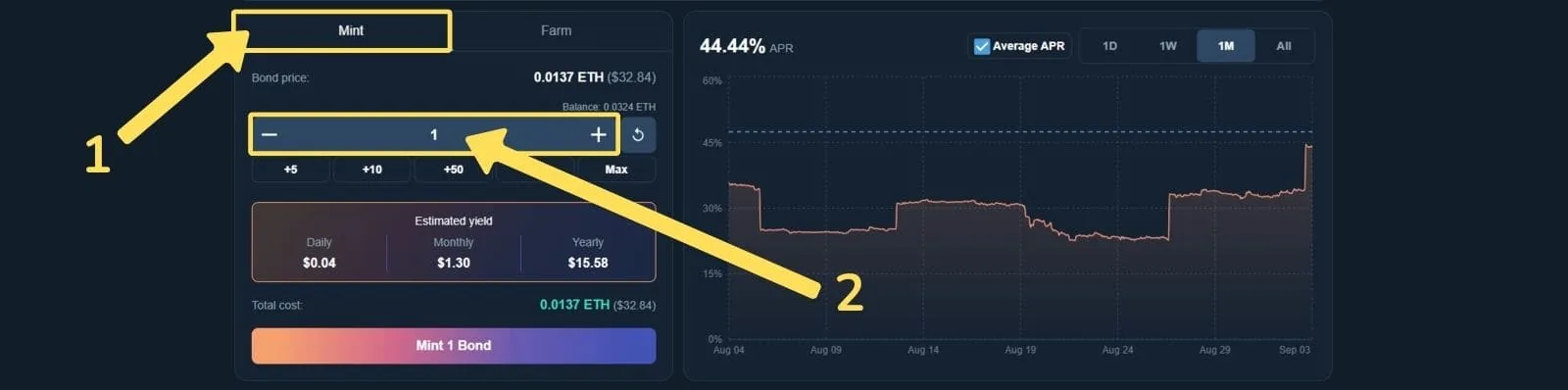
First, select the Mint tab. Then enter the number of Bonds you want to buy. Bonds are issued as whole NFTs, so you cannot buy half a Bond or any other fraction of one.

The platform will then show you how much ETH you need.

How to buy a Treasury Bond - Step 3

4

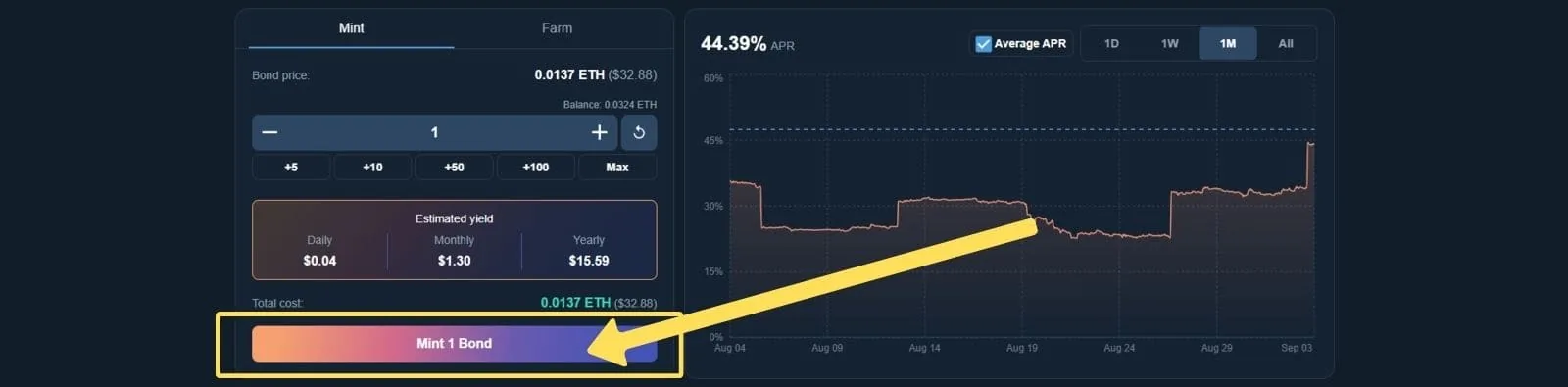
Click Mint and confirm the transaction

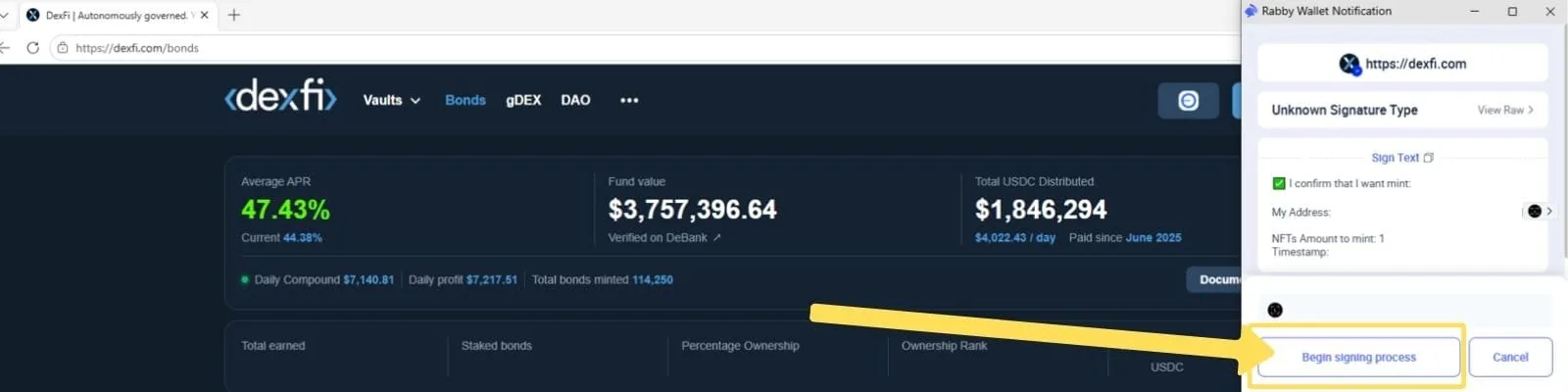
Check the number of Bonds and the amount you are paying. Then click the Mint Bond button and confirm the transaction in your wallet.

At every step, carefully check that the details are correct before approving anything in your wallet. Pay particular attention to the network, the amount, and the address the transaction is being sent to.

In addition to the price of the Bonds, you will pay a small transaction fee for processing the transaction on Base. These fees are typically only a few cents.

How to buy a Treasury Bond - Step 4.1

How to buy a Treasury Bond - Step 4.2

5

Receive your Bond

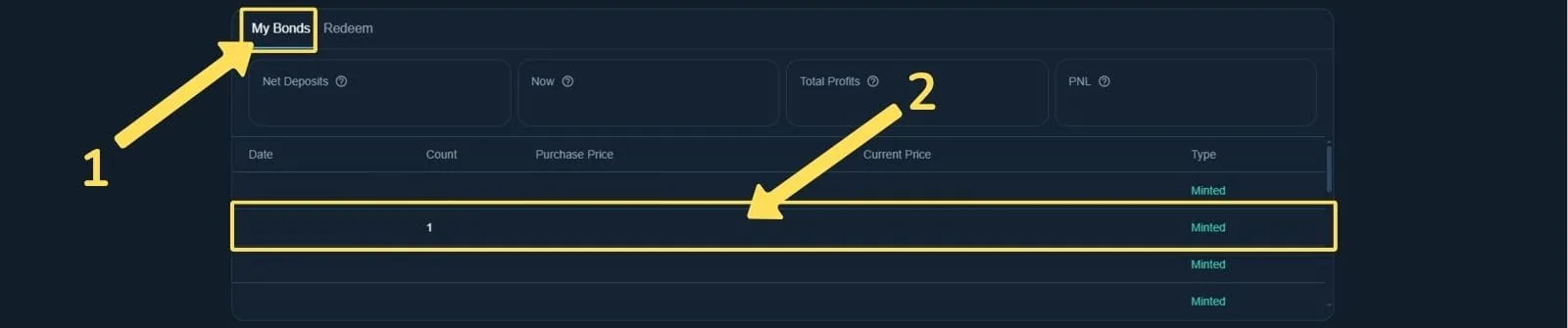
Once the transaction has been processed, your Bond is active and you immediately begin sharing in the earnings generated by the DexVaults.

It can take anywhere from a few minutes to several hours for the Bond to appear on the DexFi platform. In some cases, it may take up to a day. So don’t panic if you do not see it right away. A delay in displaying the Bond does not affect how it works.

If you use Rabby Wallet, you can also find the Bond under DeFi. At the time of writing, MetaMask does not display the Bond in its interface.

You can then use the DexFi platform to track the value of your Bond and how much it is earning.

How to buy a Treasury Bond - Step 5

How do you receive the money you earn with a Treasury Bond?

How do you receive the money you earn with a Treasury Bond?

The money you earn with a Bond is not automatically sent to your wallet. Instead, your earnings accumulate on the DexFi platform.

When you want to receive that money, you can claim it by clicking Claim on the DexFi platform. You do not need to sell your Bond to do this.

The payment is made in USDC, a stablecoin designed to stay close to one U.S. dollar in value. In practice, the price usually varies by only a fraction of a cent.

Normally, the claimed amount appears in your wallet almost immediately. According to DexFi, however, processing can take up to 48 hours in some cases.

Your Bond remains yours after you claim your earnings. You are only withdrawing the amount that has accumulated up to that point. Afterward, your Bond simply continues to generate new income.

How do you sell a Treasury Bond?

How do you sell a Treasury Bond?

If you want to exit your investment, you can sell one or more of your Bonds.

This happens in two steps.

First, go to the Farm tab on the DexFi platform. Choose how many Bonds you want to sell and click Unstake.

Once your Bonds have been unstaked, they are ready to be redeemed. Click Redeem to complete the process.

According to DexFi, this 10% is intended to encourage longer-term participation. At the same time, the money remains in the Treasury, benefiting the Bonds that stay in the system.

The amount of ETH you ultimately receive depends on the value of your Bonds when you redeem them.

Use Claim when you only want to withdraw the money your Bond has earned. Use Unstake followed by Redeem when you want to redeem the Bond itself.


LISTEN

Listen to this article

Listen to the audio version of this article.

Final thoughts

That covers the main parts of a Treasury Bond: what a Bond is, why DexFi created it, where the money you can earn with it comes from, and how you buy, use, and eventually sell a Bond in practice.

From a Bondholder’s perspective, the process is relatively simple. Behind the scenes, however, there is a lot more going on. DexVaults put the liquidity to work, while AiLM helps manage it.

In the next article, we’ll take a closer look at what happens behind the scenes: how exactly do DexVaults and AiLM work?